
Custom Power Bank Supplier: What to Include in Your RFQ
A ready-to-use RFQ framework that helps B2B buyers get comparable custom power bank quotations and identify the decisions still needed before sampling.
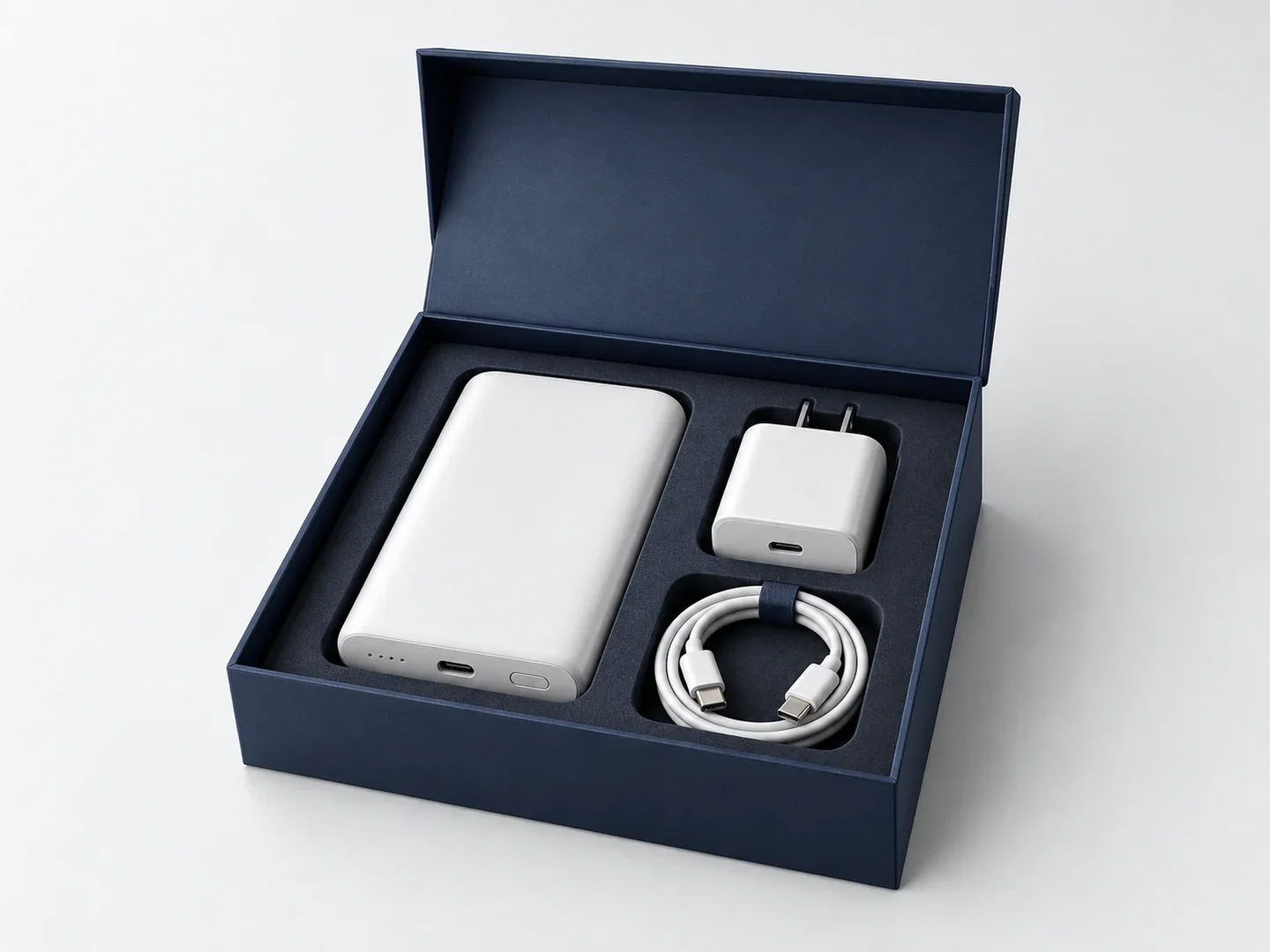
A request for quotation is most useful when a custom power bank supplier can separate confirmed requirements from assumptions. A short request such as “send your best price” often produces quotations for different product configurations. A structured brief makes comparison easier and reduces repeated questions before sampling.
Describe the business and the product goal
Introduce your company, sales channel and destination market. Explain whether the project is a branded retail product, a distributor range, a corporate gift or another program. Provide a preferred model from the product catalog if you have one, or describe the form factor and customer use case if the product choice is still open.
State the planned first order, expected reorder pattern and launch target as planning information. Avoid presenting an uncertain forecast as a committed purchase. Ask the supplier which decisions or approvals are needed before the schedule can be confirmed.
Separate technical requirements from preferences
List the functions your customer needs and identify the features you are flexible about. Ask for a specification sheet for the proposed model, including the battery configuration, input and output details, dimensions, weight and supported charging behavior. The exact values should be confirmed in the quotation and sample approval record.
- Required capacity or the intended usage target to discuss.
- Port arrangement and wired charging functions.
- Magnetic or wireless charging requirements, if relevant.
- Device compatibility and the sample test setup.
- Size, weight and appearance priorities.
For a magnetic project, use the magnetic power bank OEM checklist to define the device list and mechanical experience. Keep unresolved technical questions in the RFQ so the supplier can answer them explicitly.
Specify branding, packaging and accessories
Share a logo file and color references when available. Describe the desired logo position and finish, but allow the manufacturer to confirm what the selected model supports. List the packaging format, instruction language, barcode responsibility and accessories included with each unit.
Request a breakdown of customization costs
Ask which costs are charged per unit and which are charged once, such as artwork setup, tooling or agreed development work. Confirm the quantity assumptions for packaging and custom components. A clear breakdown prevents a low product-only price from being compared with a quotation that includes a complete retail bundle.
Plan samples and the approval process
Explain whether you need an existing-model evaluation sample, a branded pre-production sample or a development prototype. Request the sample cost, shipment assumptions and the approvals required before it can be made. Identify the person on your side who can approve specifications, appearance and packaging.
Use a written acceptance checklist and retain the approved file versions. If the sample requires a change, document it and ask whether another sample is necessary. The production order should reference the approved configuration rather than a series of informal messages.
Request comparable commercial and quality information
Ask for quantity-based pricing, trade terms, payment milestones, quotation validity and the estimated schedule under stated assumptions. Include carton details and shipment information needed for freight planning. Confirm relevant documentation with your importer or logistics provider for the actual product and route.
Ask how production inspection, batch identification and defect handling will work for your order. Define what happens if a requested material or component becomes unavailable. A supplier should be able to explain the change approval process before it becomes urgent.
Send the brief and track the open questions
A practical RFQ closes with a short list of questions: which existing model is recommended, what remains to be confirmed, which costs are excluded, and what starts the sample and production schedule? Use one version of the brief and update it as decisions are approved.
Explore our custom power bank supplier page and power bank manufacturing overview. When ready, send Shanze your RFQ with the product type, destination market, planned quantity and customization priorities.